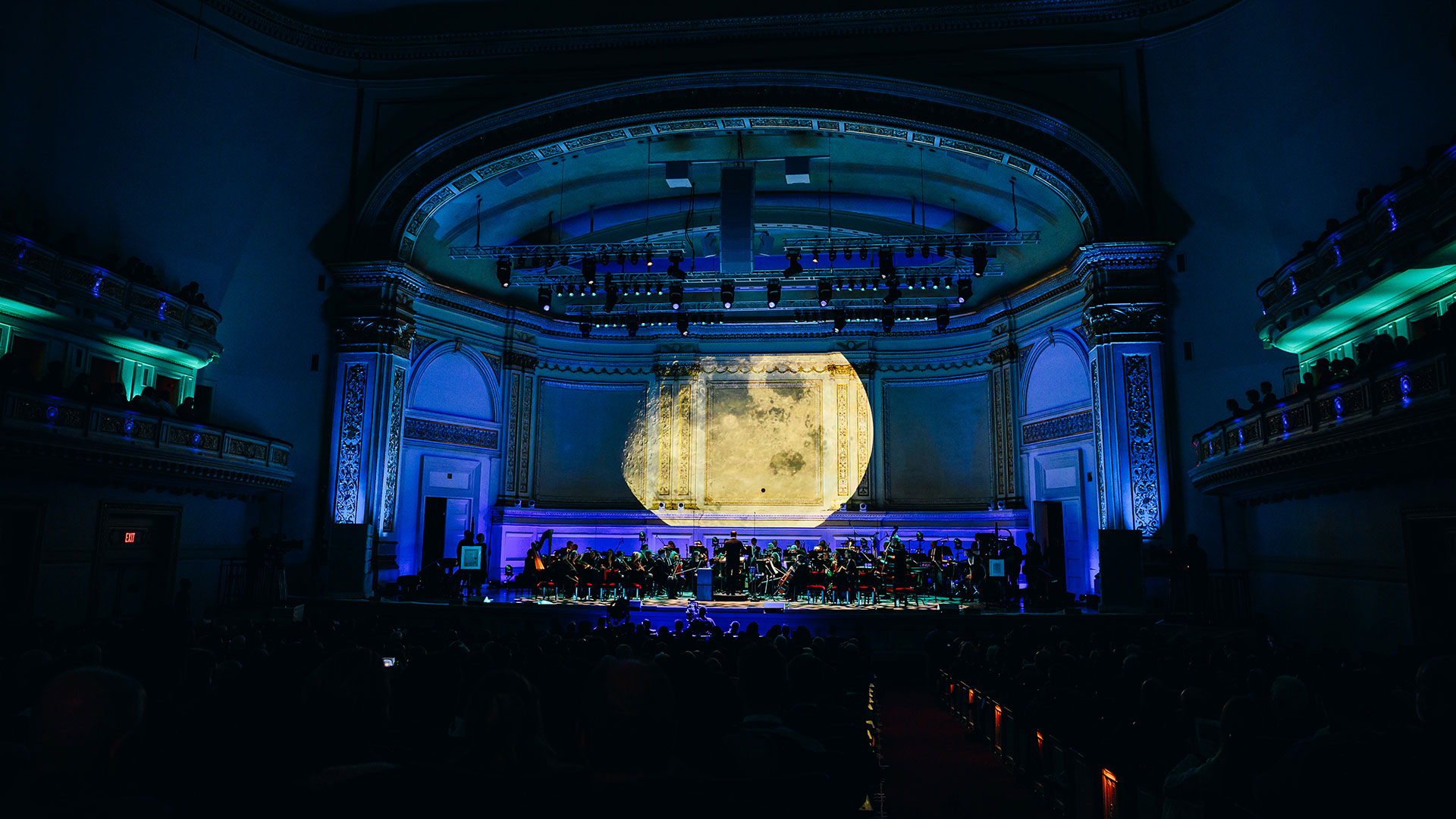
November 10, 2026 — Historian John Monsky's passion for collecting flags led him to unfurling rarely-seen Apollo program history as he recounted the first moon landings before a large audience.
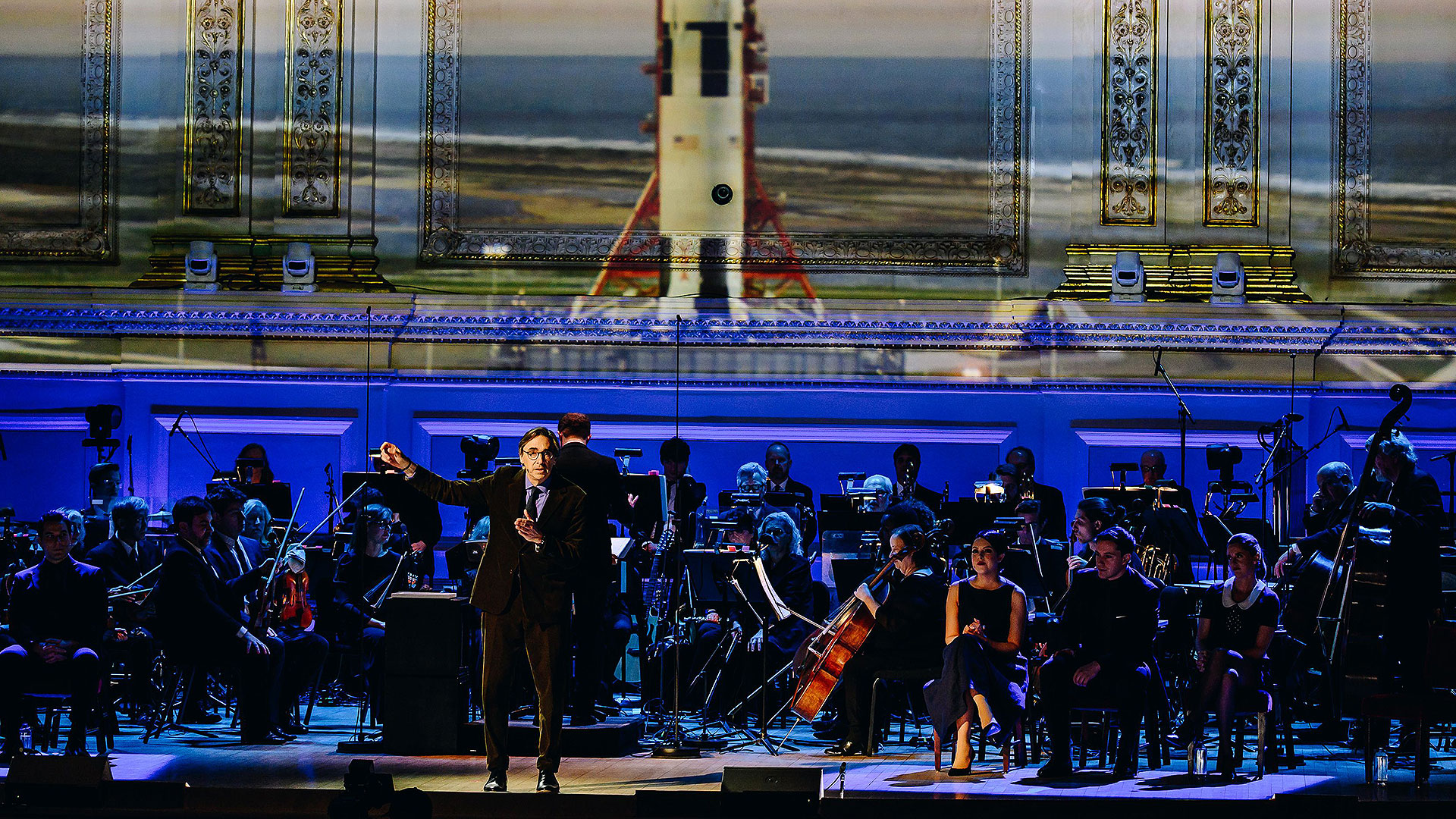
On stage at New York City's Carnegie Hall, Monsky was an hour into his narration of "We Chose to Go to the Moon" — a "living documentary" making its televised premiere on PBS on Tuesday (Nov. 10) — when he reached the topic of the fire that claimed three astronauts' lives on the launch pad. Throughout the production, NASA imagery, music from a 45-piece orchestra and band and a cast of Broadway vocalists made the production more than a lecture. What happened next, though, set this performance apart.
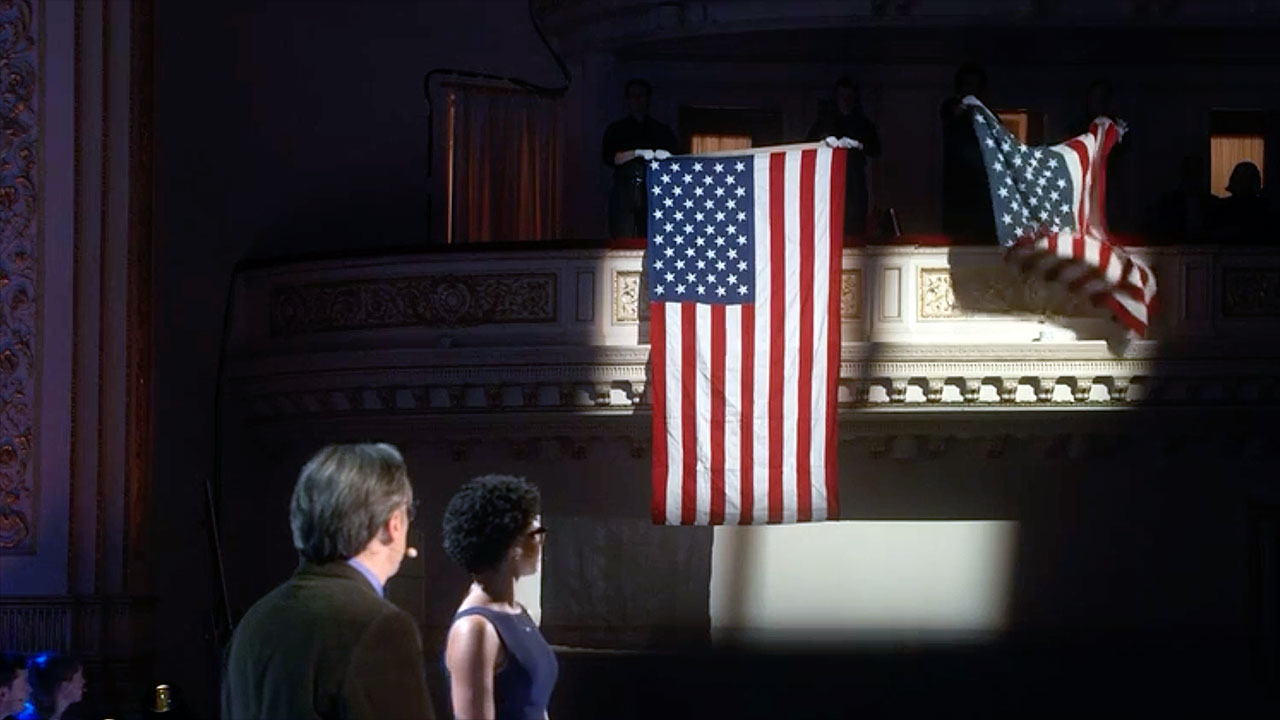
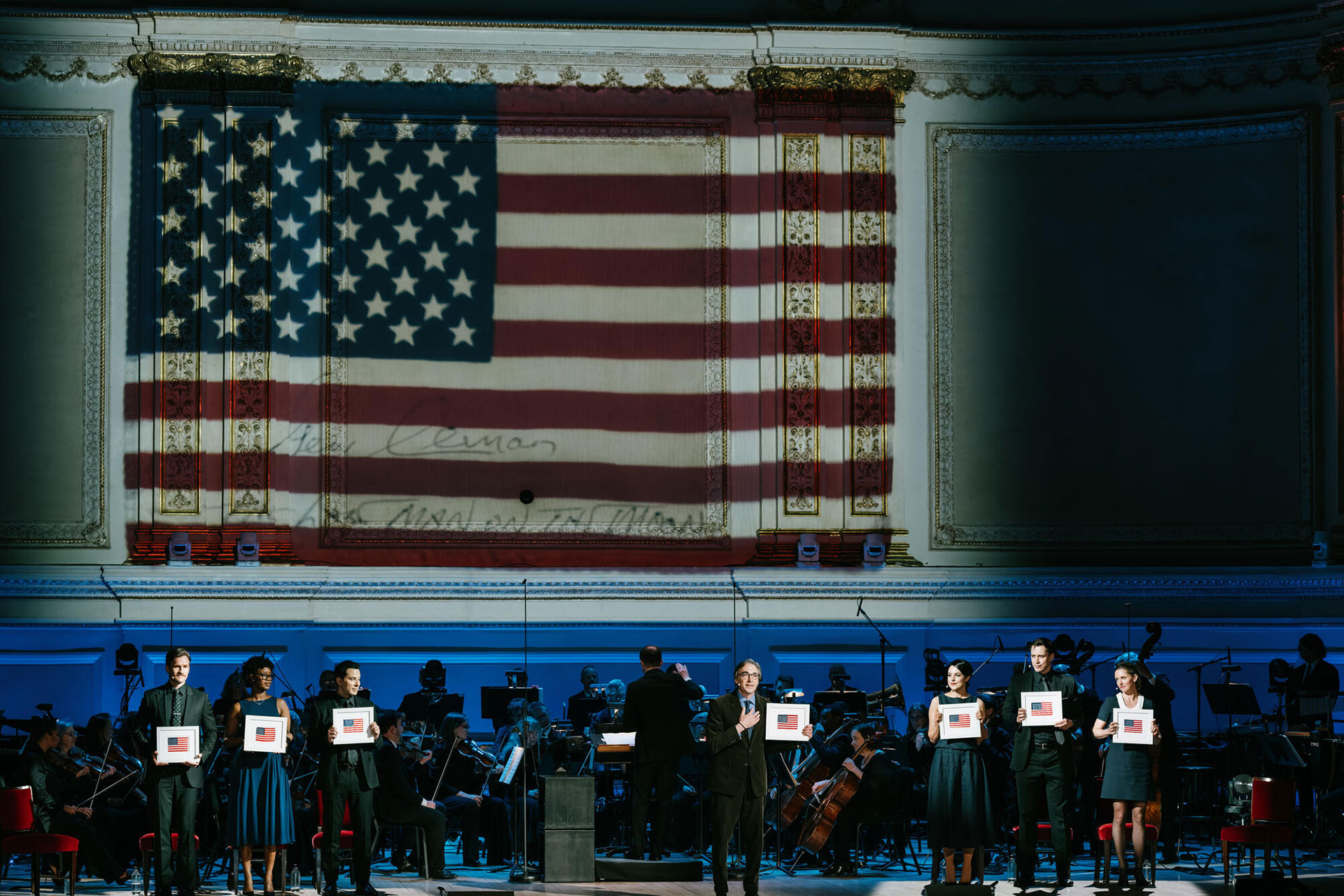
"When a veteran is buried, the coffin is often covered with a flag. It is given to the family just prior to burial," explained Monsky on stage. "Tonight we have a sacred moment. With the blessings of their families, to honor the crew of Apollo 1, we have their flags with us."
As the names Ed White, Gus Grissom and Roger Chaffee were spoken aloud, the three large red, white and blue banners dropped open from the balcony above.
"The thing that occurred to me is these three flags have never been together before," said Monsky in an interview with collectSPACE. "They [the astronauts] were together as a team, but they [the flags] were not together because White was buried at West Point, while Grissom and Chaffee are at Arlington."
Monsky dispatched special couriers to collect the flags from across the country to arrive just in time for the filmed performance in April.
"The flags came here for the production. It's not the kind of thing that you could rehearse. We didn't say send the flags six months ahead of time, so we could try it all out," said Monsky. "So there was a little bit of a landing on the moon there in terms of that we were doing this for the first time when we dropped them."
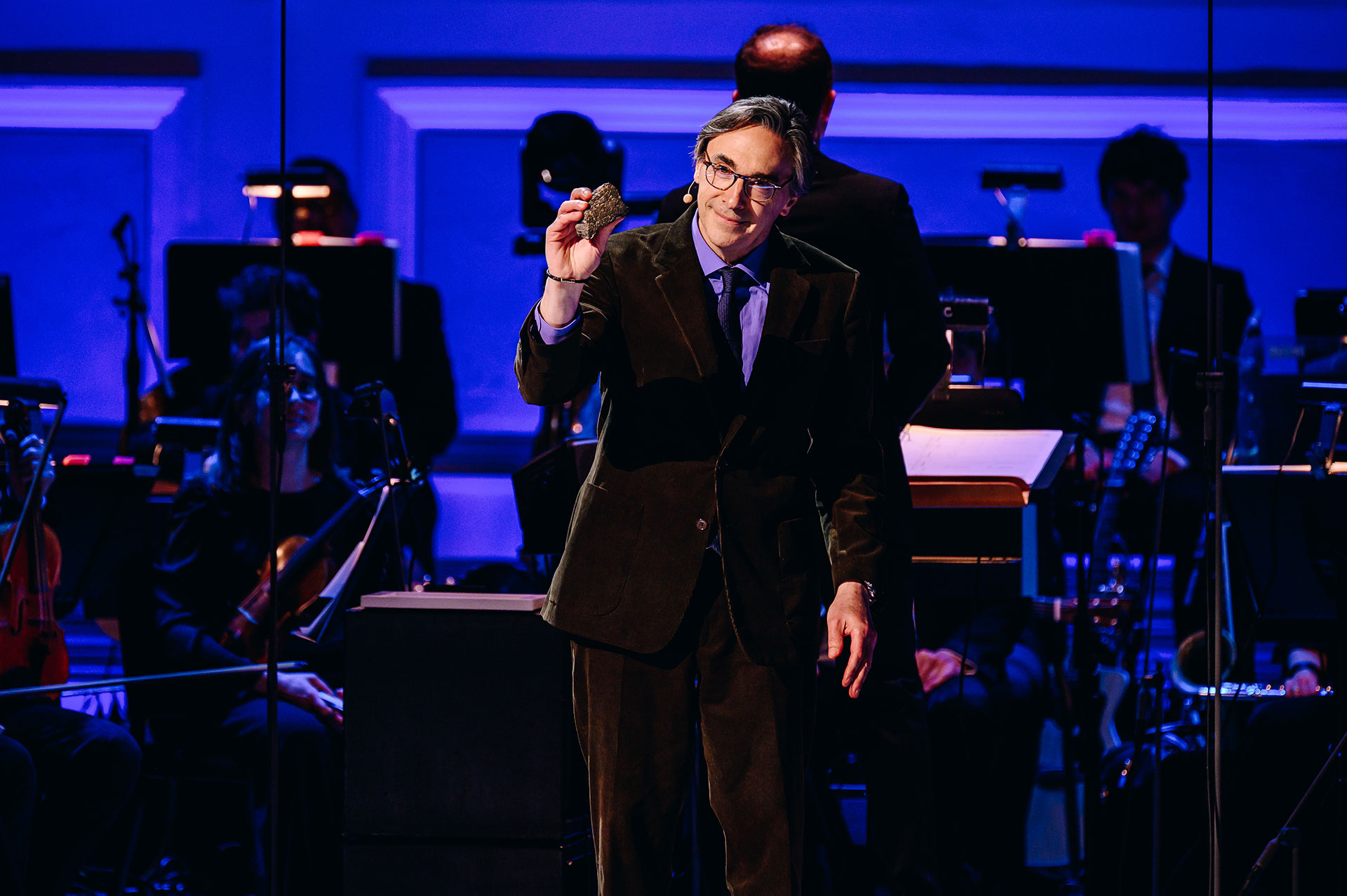
It is moments like those, fueled by Monsky's own appreciation for ephemera, that make "We Chose to Go to the Moon" stand out.
"What you're about to see is unlike any telling of mankind's journey to the moon that I have ever experienced. I've told a piece of this story in my film 'Apollo 13,' but nothing prepared me for seeing it like this," says Ron Howard in a special introduction to the PBS broadcast. "It moved me deeply and illuminated just how far from inevitable this achievement truly was."
Part of the experience are the surprises, which even the cast encountered with a special appearance. Performing vignettes and vocal performances are stage and film star Skylar Astin (Pitch Perfect, Spring Awakening), Grammy Award nominee Brent Comer (The Outsiders), Claybourne Elder (Company, "The Gilded Age"), TV star Elizabeth Gillies (Netflix's "Dynasty"), Tony Award nominee Taylor Louderman (Mean Girls) and Grammy and Tony Award nominee Joy Woods (Gypsy, Six).
"There's one moment in the second act that's very special," Monsky told collectSPACE. "Mark Armstrong, the son of Neil, told me that he and his daughter Kali were planning to be at Carnegie and they were both musicians."
In 2019, for the 50th anniversary of the Apollo 11 moon landing, Mark wrote "Flight of Fancy" inspired by the time his father took him up on a glider. Kali sang the song for its release.
"So I went back to my Broadway directors, producers and musicians and told them about having Mark and Kali sing "Flight of Fancy" as part of the show. As you'll see in the film, everybody on stage, including all of the actors, was just blown away. Kali's amazing. It's an amazingly emotional moment," said Monsky. "Things happen that surprise us all, and it just comes together."
"It's hard to imagine it was going to come off like it did, but it's beautiful," he said.
There was one additional twist to the performance, one that Monsky, director Michael Mayer or anyone associated with the production could not make happen, let alone plan for in advance. But it fit so well with the end of the presentation that it felt like it was done on purpose.
"Amazingly enough, the night that we are on stage that you see in that film at Carnegie Hall, Artemis II was looping around the moon," said Monsky, referring to the first crewed lunar flyby since Apollo.
"We Chose to Go to the Moon" will stream simultaneously with broadcast and be available on all station-branded PBS platforms beginning at 8 p.m. EST Tuesday.