January 22, 2026 — NASA's first astronauts to fly to the moon in more than 50 years will pay tribute to the lunar and space exploration missions that preceded them, as well as aviation and American history, by taking with them artifacts and mementos representing those past accomplishments.
NASA on Wednesday (Jan. 21) revealed the contents of the Artemis II mission's Official Flight Kit (OFK), continuing a tradition dating back to the Apollo program of packing a duffel bag-size pouch of symbolic and celebratory items to celebrate the flight and recognize the people behind it. The kit includes more than 2,300 items, including a handful of relics.
"This mission will bring together pieces of our earliest achievements in aviation, defining moments from human spaceflight and symbols of where we're headed next," Jared Isaacman, NASA's Administrator, said in a statement. "Historical artifacts flying aboard Artemis II reflect the long arc of American exploration and the generations of innovators who made this moment possible."
The Artemis II mission, which may launch as soon as early February, is set to take three NASA astronauts — commander Reid Wiseman, pilot Victor Glover and mission specialist Christina Koch — and a representative of the Canadian Space Agency, mission specialist Jeremy Hansen, on a 10-day flight that take them farther out into space than any humans have ever traveled before and then return them safely to Earth.
The mission includes a flyby of the moon, affording the crew an opportunity to see parts of the far side never observed directly by human eyes.
Banners aboard
"During America's 250th anniversary, Orion will carry astronauts around the moon, while also carrying our history forward into the next chapter beyond Earth," said Isaacman.
Inside the OFK are numerous flags of different types, including hundreds of U.S. and "America 250" flags for post-flight presentation. The kit also holds two special examples of the stars and stripes, one that is returning to space for its third time, and another that is finally getting its chance to fly.
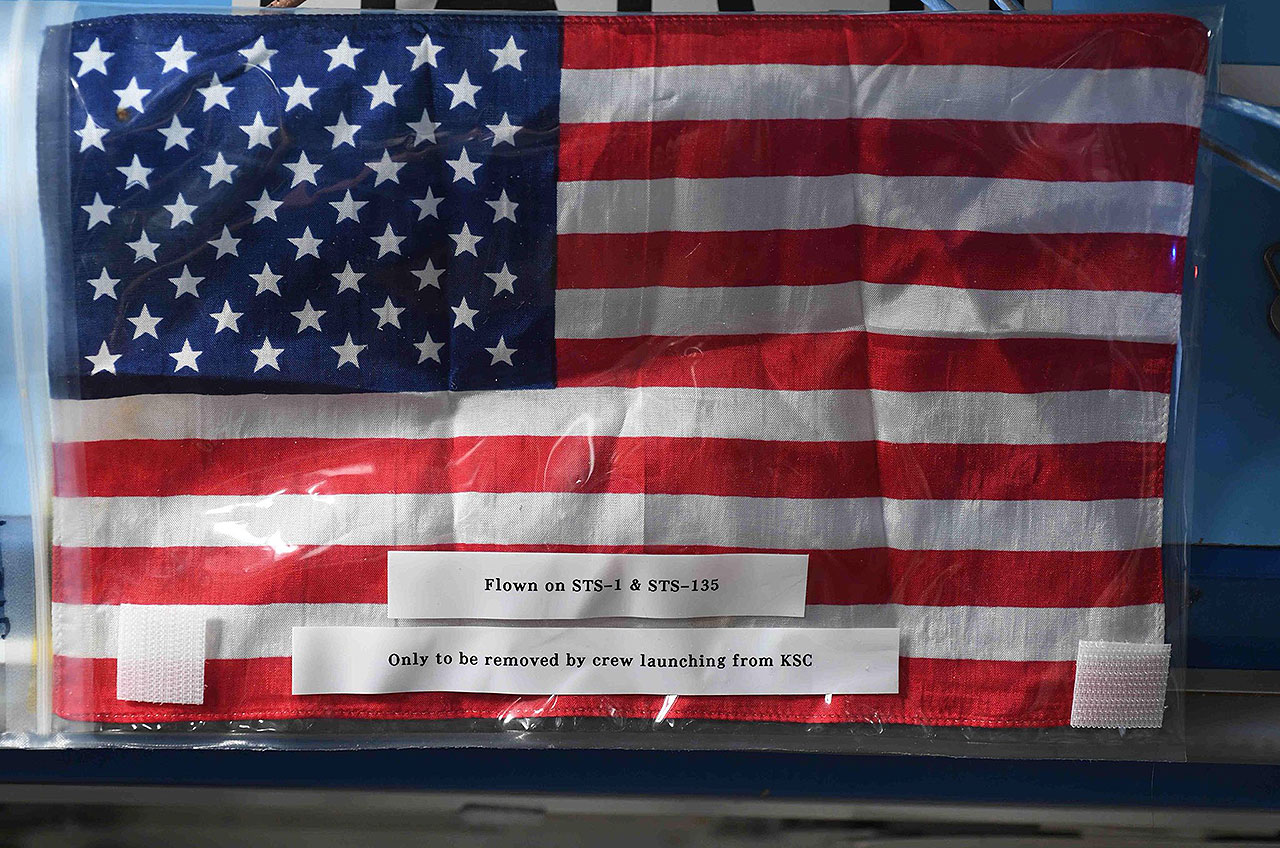
The "Legacy Flag" which first flew on STS-1, the inaugural space shuttle mission in 1981, was then launched to the International Space Station on STS-135, the final space shuttle mission, in 2011 and brought back to Earth by the SpaceX Demo-2 crew, the first astronauts to fly into orbit on a U.S. commercial spacecraft, 2020. NASA then pledged to fly the 13-by-8-inch (33-by-20-centimeter) American flag yet again on the next crewed flight the moon.
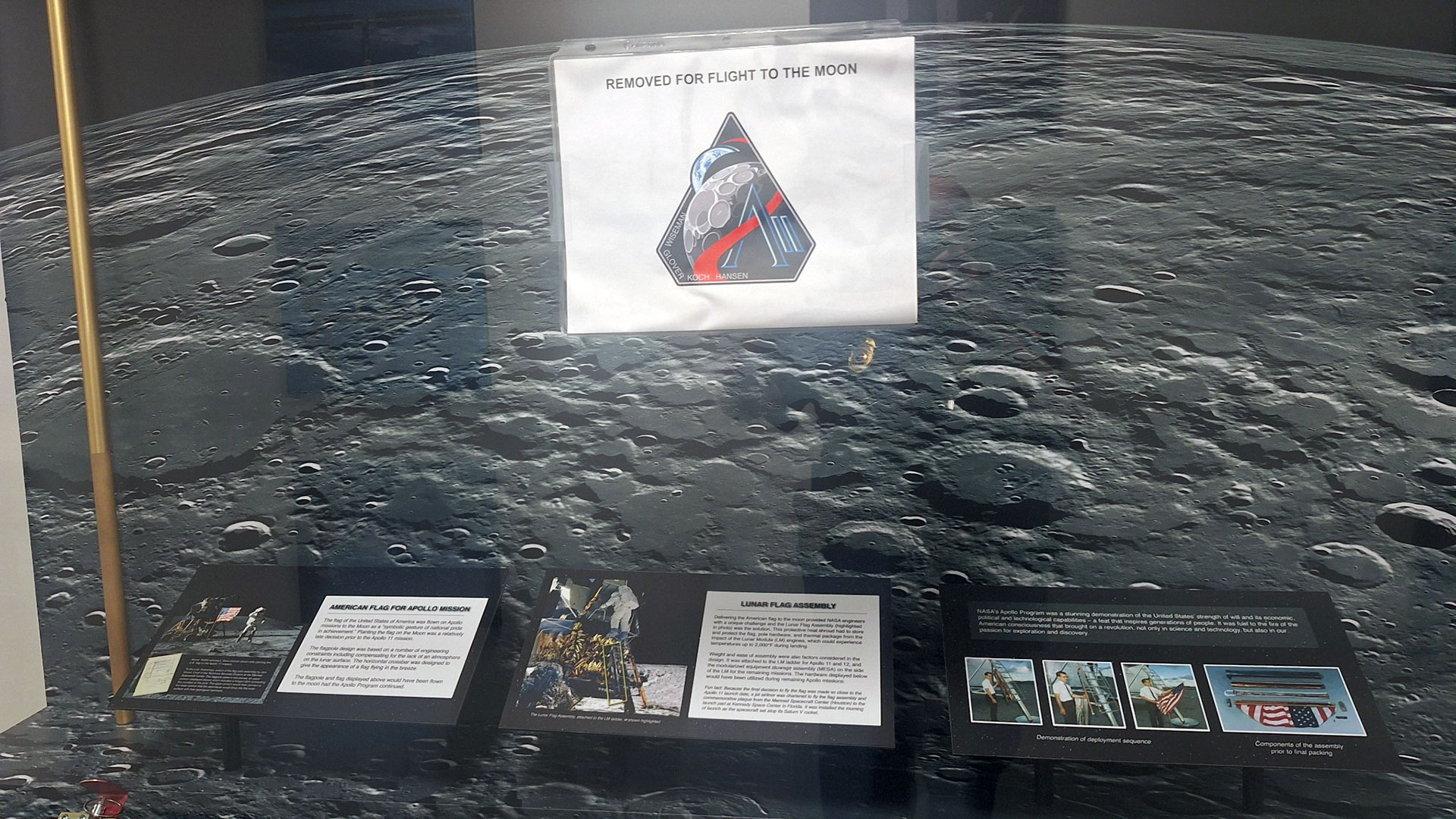
A larger, 3-by-5-foot (0.9-by-1.5-meter) U.S. flag is also in the Artemis II OFK. It was prepared like at least seven others to be deployed on the lunar surface until its mission, Apollo 18, was canceled due to budget cuts. The banner was instead put on display at NASA Headquarters in Washington until recently, when it was taken off exhibit to make its premiere flight to the moon on Artemis.
Other flags inside the mission's OFK include those representing U.S. states and military branches, the United Nations, various schools and other countries. The European Space Agency (ESA), which provided the service module for he Artemis II Orion spacecraft, has aboard one its logo flags for display after the mission.
From the ground to flight
The Artemis I OFK that flew on an uncrewed test flight in 2022, carried tree seeds around the moon, similar to how Apollo 14 astronaut Stuart Roosa did in 1971. The resulting Artemis moon trees, like the Apollo moon trees before them, have since grown to become living reminders of what humanity is capable of achieving.
On Artemis II, NASA is flying soil samples collected from the base of established Artemis moon trees that were planted at the agency's ten centers. The packets of earth represent "the full cycle of exploration: launch, flight, growth and return to space again," as explained by NASA. The Canadian Space Agency will restart that cycle with tree seeds it is flying on Artemis II to be planted around Canada.
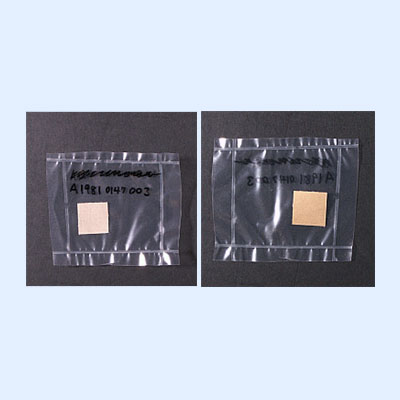
The Smithsonian's National Air and Space Museum has loaned a 1-by-1-inch (2.54-by-2.54 cm) swatch of muslin fabric that was cut from the right wing of the original Flyer that the Wright Brothers used to make the first powered flight in 1903. The swatch was cut from a larger sample that previously launched on the space shuttle Discovery's STS-51D mission in 1985.
After Artemis II, NASA will return the fabric to the museum, which displays the Wright Flyer as well as other space-flown swatches, including pieces that were landed on the moon by Neil Armstrong and Buzz Aldrin in 1969.
Before Apollo 11 touched down with the first humans, NASA's Ranger 7 became the first U.S. mission to successfully make contact with the lunar surface. Artemis II will carry a copy of a 4-by-5-inch (10-by-13-cm) negative of a photo from that 1964 robotic mission. The photo represents "a major turning point in the race to the moon that will be echoed today through the success of Artemis," according to NASA officials.
Shavings and a name card... two bits (of rodeo)
Beyond patches, pins and decals, a few other standout items in the 10-pound (4.5-kilogram) Artemis II Official Flight Kit include an SD card recorded with the names of 2.9 million (and counting) people who signed up to be on the mission and metal shavings from the construction of the Space Launch System (SLS) core stage, the largest component of the mission's launch vehicle.
There is also a badge and a "leather back number" from the Houston Livestock Show and Rodeo, an annual event in "Space City," home to the Johnson Space Center in Texas.
In addition to the OFK, the astronauts each have their own Personal Preference Kit (PPK), a smaller pouch in which they can carry mementos that have significance to them. As examples, Wiseman said he is flying a notecard to take down his thoughts during the flight; Glover has a bible, heirlooms for his wife and children and a collection of inspirational quotes compiled by Apollo 9 astronaut Rusty Schweickart; Koch has handwritten notes from people that she loves to serve as a tactile connection between her and them; and Hansen has four moon pendants that he is taking for his wife and three children. |
|
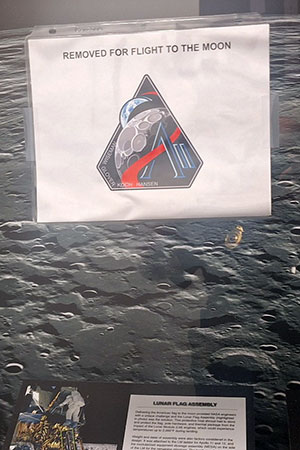
A sign hung on a glass exhibit case at NASA Headquarters in Washington reads that the Apollo 18 lunar surface flag that had been on display was "removed for flight to the moon" as part of the Official Flight Kit (OFK) for the Artemis II mission. (Cole Simmons)

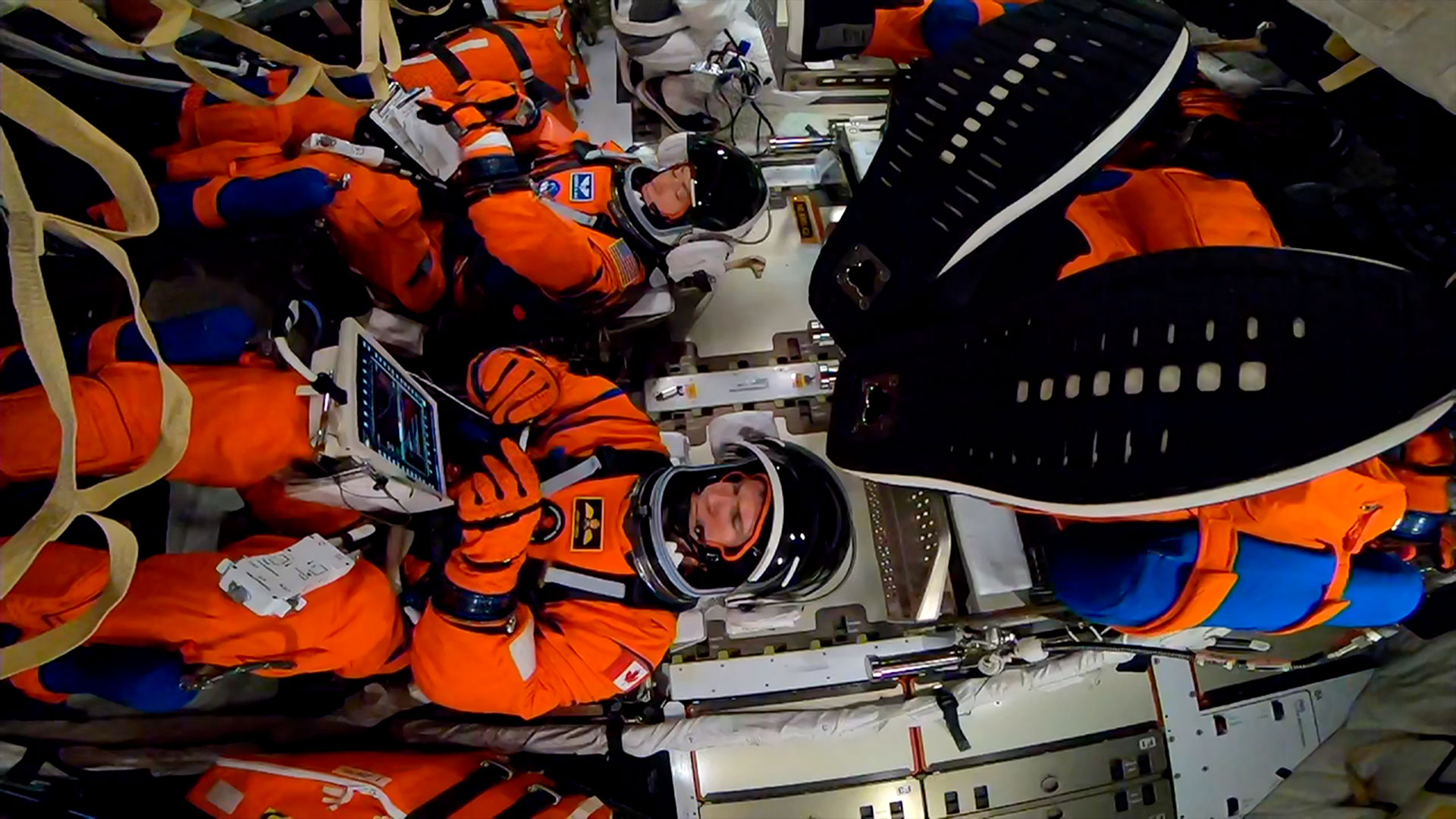
The Artemis II Official Flight Kit will fly aboard the Orion spacecraft "Integrity" stowed in a locker for the duration of the 10-day mission so to be out of the way for he mission's four crewmembers. (NASA)
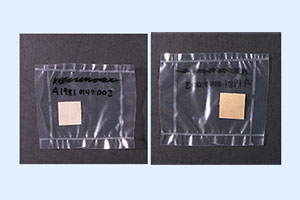
Front and back views of the square of 1903 Wright Flyer wing fabric that is flying on NASA's Artemis II moon mission. (Smithsonian)
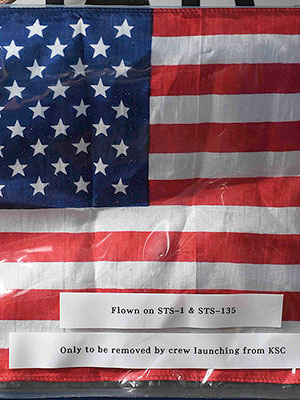
An American flag flown on the first and last space shuttle missions as well as returned to Earth with the first U.S. commercial crew to launch to the International Space Station will next fly by the moon as part of the Artemis II Official Flight Kit, or OFK. (NASA) |